Most Shopify apps fail before they ship a single line of code — not because the developer lacked skill, but because the idea was wrong from the start. Finding a good Shopify app idea is not a creative exercise; it is a filtering exercise. The store has over 20,000 apps across dozens of categories, and most of them have room for a sharper, more focused entrant. Your job is not to invent something from scratch — it is to identify where merchant demand is real, where existing solutions are mediocre, and where you can realistically compete. Then eliminate everything that does not meet that bar. This guide walks the whole 7-step process for finding a Shopify app idea, end to end.
Build a shortlist of app ideas
Step 1 — Start from problems, not solutions
The single most common mistake when hunting for a Shopify app idea is starting with a solution — "I want to build an upsell app" or "something with AI." The market does not reward solutions. It rewards solutions to problems merchants actively feel. Before you open the store, spend time where Shopify merchants talk:
- Reddit — r/shopify, r/entrepreneurship. Search for "I wish there was an app that…" or "does anyone know an app for…"
- Shopify Community forums — the Feature Requests section is a direct signal of unmet needs Shopify itself has not addressed.
- App Store reviews — the 1- and 2-star reviews on category leaders are gold. They tell you what the market wanted and did not get.
- Facebook groups — Shopify Entrepreneurs, dropshipping, print-on-demand. The recurring questions are your brief.
Write down every problem that comes up more than once. A problem one merchant has is a feature request; a problem three hundred merchants describe the same way is a business. Aim for a long list — 20 to 50 candidate problems — before you apply any filter. Premature narrowing kills ideas that would have survived scrutiny.

Step 2 — Map each problem to a Shopify app category
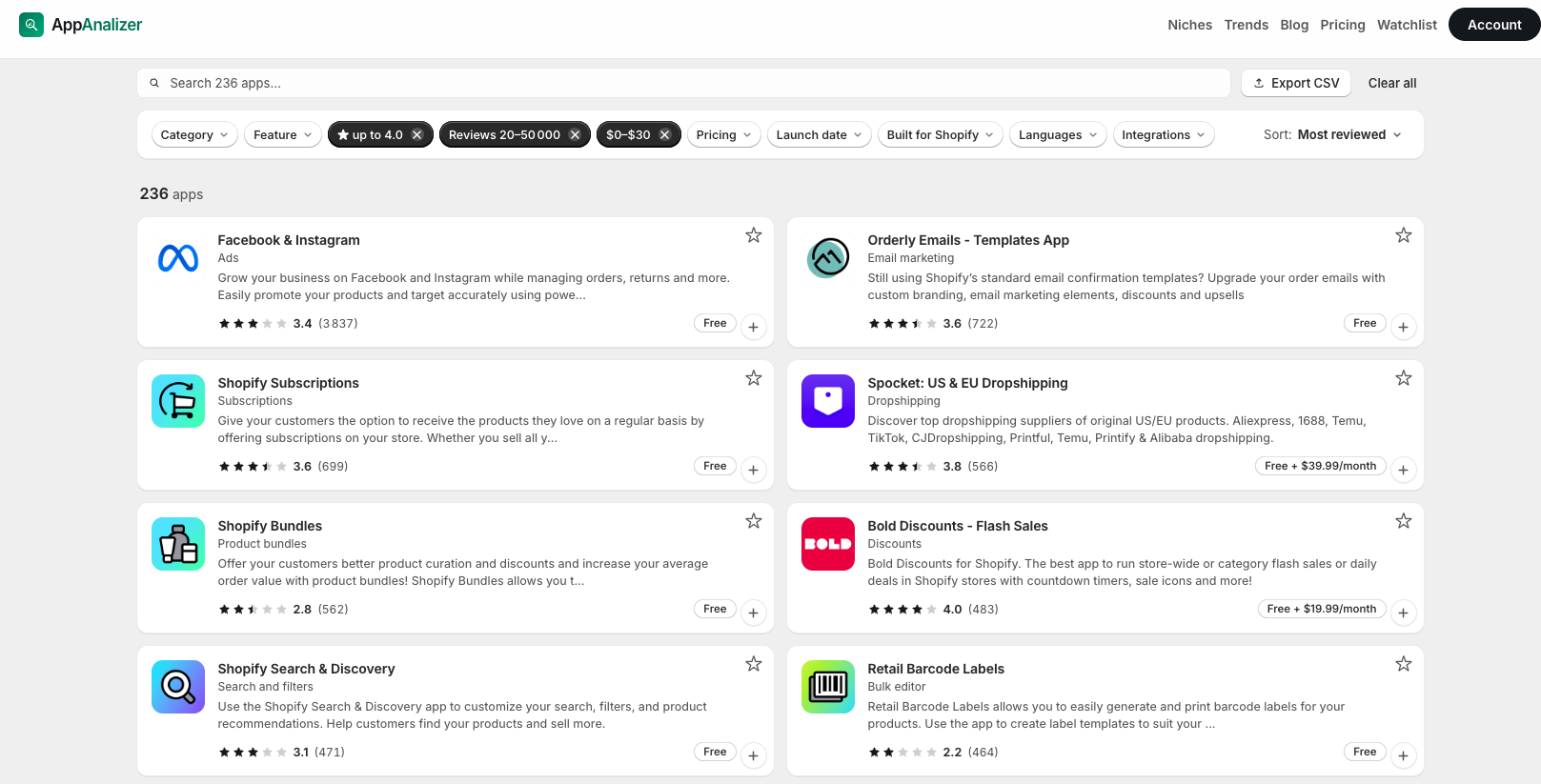
Translate each problem into a store category. The mapping is not always one-to-one: "I need my loyalty program to talk to my email flows" maps to both Loyalty and Email marketing, and that overlap is itself a signal — a gap between two categories no focused app serves. For each problem, check the basics: how many apps exist (demand proxy), the average rating (satisfaction proxy), and how many carry Built for Shopify certification (quality ceiling). Keep any category where the average rating is below 4.0 and the app count is above 20 — together they mean merchants need a solution and have not found a good one. Browse the full field for any vertical under categories.
Validate your app ideas with data
Step 3 — Rule out the structurally hard categories
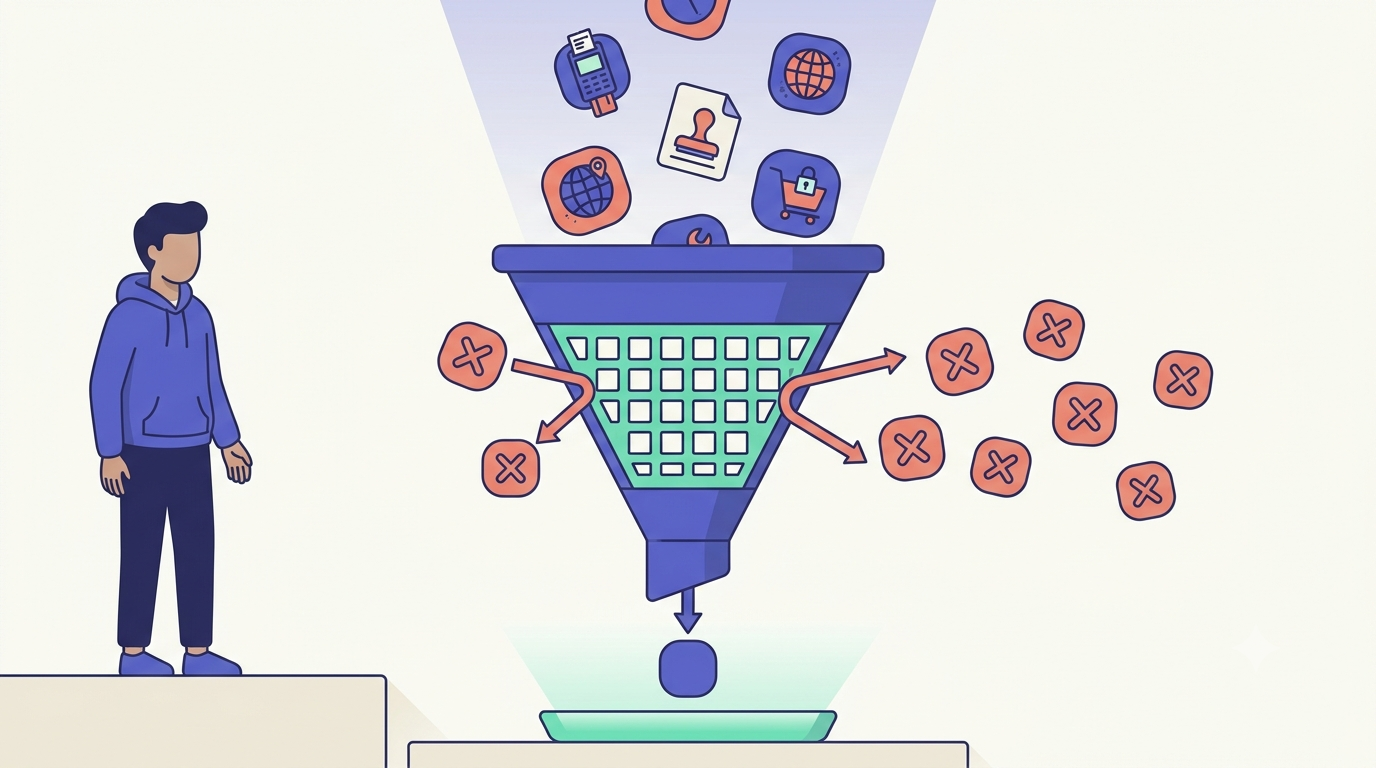
Before going deeper, run every candidate through a set of hard exclusions: categories where structural constraints make a sustainable indie SaaS very hard — regardless of how appealing the market looks. Exclude immediately if the app falls into one of these:
- Checkout extensions — Shopify Plus merchants only, so a tiny addressable market.
- Retail / in-person selling — requires hardware, physical operations, high-touch support.
- Dropshipping sourcing — depends on third-party supplier APIs outside your control.
- Accounting / Tax filing — legal compliance risk and jurisdiction complexity.
- Store data import / migration — one-shot usage, no recurring subscription.
- B2B wholesale pricing — long sales cycles, heavy support, slow installs.
- Translation / Multi-language — infrastructure-heavy, maintenance-heavy at scale.
- Shipping rates / carriers / labels — relies on carrier APIs and accounts; Shopify Shipping competes natively.
- Returns / RMA — needs carrier and logistics integrations; operational, not pure software.
- Print-on-demand sourcing — supplier-API dependent (same family as Dropshipping sourcing, already listed).
- Inventory / ERP / order sync — reliability liability across external systems, heavy support.
These are not universal truths — there are successful apps in each. But the constraints are structural, not execution-based, and a small team cannot easily overcome them. Spend your time on categories where the path to $10k MRR is not blocked by factors outside your control.
Step 4 — Validate demand with quantitative signals
For every remaining candidate, pull the data and apply a few numeric filters. Drop any opportunity that fails more than two:
- Rating floor — average category rating below 4.0. Above that, merchants are largely satisfied and you would need a strong differentiation thesis to enter.
- Review ceiling — no single app with more than 1,000 reviews dominates. Above 1,000, an app has a social-proof moat that is expensive to displace; you are starting 100x behind on the listing page.
- Monetization signal — at least one app has a paid plan. A category where everything is free tells you merchants do not pay here.
- Price ceiling — the cheapest paid plan is under $30/month. Above that as an entry price, you are often in enterprise territory: complex procurement, long cycles, support costs that kill solo developers.
- Built for Shopify trap — if the leader already holds BFS and has 300+ reviews, they own a discoverability edge. You can still enter, but your differentiation must be on product, not the listing page.
Step 5 — Measure market traction (age × reviews)
This is the filter most developers skip. For every app you might compete with, compute review velocity:
review_velocity = total reviews ÷ months_since_launch
The rule: if an app has been live 3+ months and its velocity is below 1.5 reviews/month, the market is not responding. Below 1.5 means fewer than 18 merchants a year care enough to leave a review — not dead, but slow. Apps above 3.0 are gaining real ground. The sweet spot is a category where the top 1–2 apps have solid velocity (3+/month) but the other 10–15 are flat: demand is real but not yet concentrated, so there is still space to compete. Sort any category by reviews and scan launch dates directly in AppAnalizer to read the velocity in seconds.
Decide which app idea to build
Step 6 — Mine 1-star reviews for the real brief
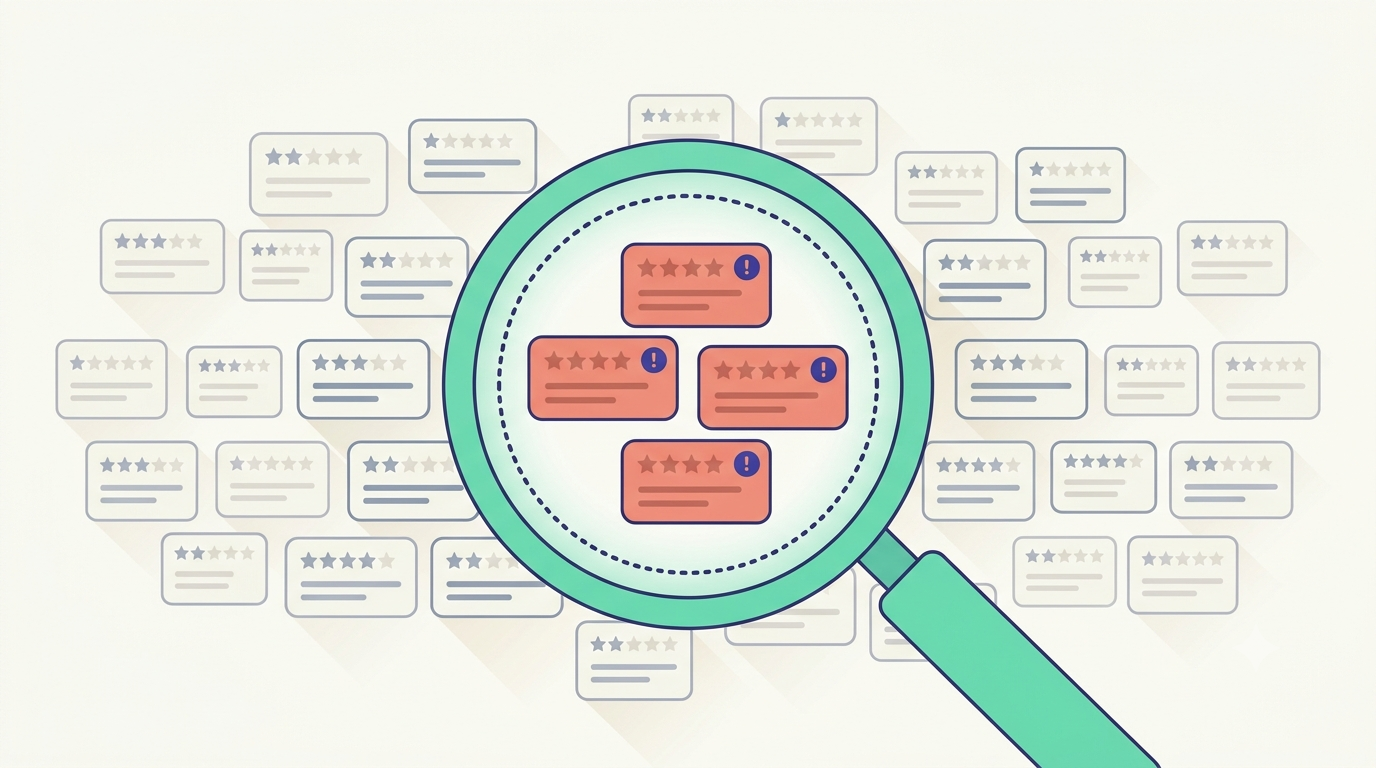
Once a category passes the filters, stop analyzing data and start reading text. Open the 3 most-reviewed apps, sort their reviews by lowest rating, and read every 1- and 2-star review you can find. You are not hunting isolated complaints — you are hunting patterns that recur across multiple apps. Common ones that signal a real opportunity:
- "It broke my theme" — performance and compatibility complaints. A technically solid app with no breakage wins on this dimension alone.
- "Support never responded" — if every top app has support complaints, responsive support is a genuine differentiator.
- "I need X but it's on the $99 plan" — pricing friction. A well-designed freemium tier can unlock a segment the incumbents ignore.
- "Only works on Shopify Plus" — the non-Plus majority is underserved.
- "Setup took a developer" — onboarding complexity. An app a non-technical merchant configures in under 10 minutes converts better than a powerful but confusing one.
When the same complaint appears across three or more apps, it is not a bug — it is a category-level unmet need. That is your brief: build the app that solves the thing the entire category fails at.
Step 7 — Score the app idea with a go/no-go scorecard
Synthesize everything into a simple go/no-go on the app idea. Score the candidate against seven criteria — count a "green" each time it clears the favorable bar:
- Average rating — green below 3.5, red above 4.0.
- Top app review count — green under 500, red over 1,000.
- Top-app review velocity — green at 3+/month, red under 1.5.
- Category price floor — green at $10–30/month, red over $30.
- BFS penetration — green under 5% of apps, red over 15%.
- Recurring review complaint — green when a clear pattern spans 3+ apps.
- Shopify-native risk — green when there is no announced native feature, red once it ships.
5+ greens: build. The market is there, the gap is real, the first install is not structurally blocked. 3–4 greens: investigate — you may have a thesis, but you need a stronger angle or a tighter merchant segment. 2 or fewer: move on. A better opportunity exists elsewhere.
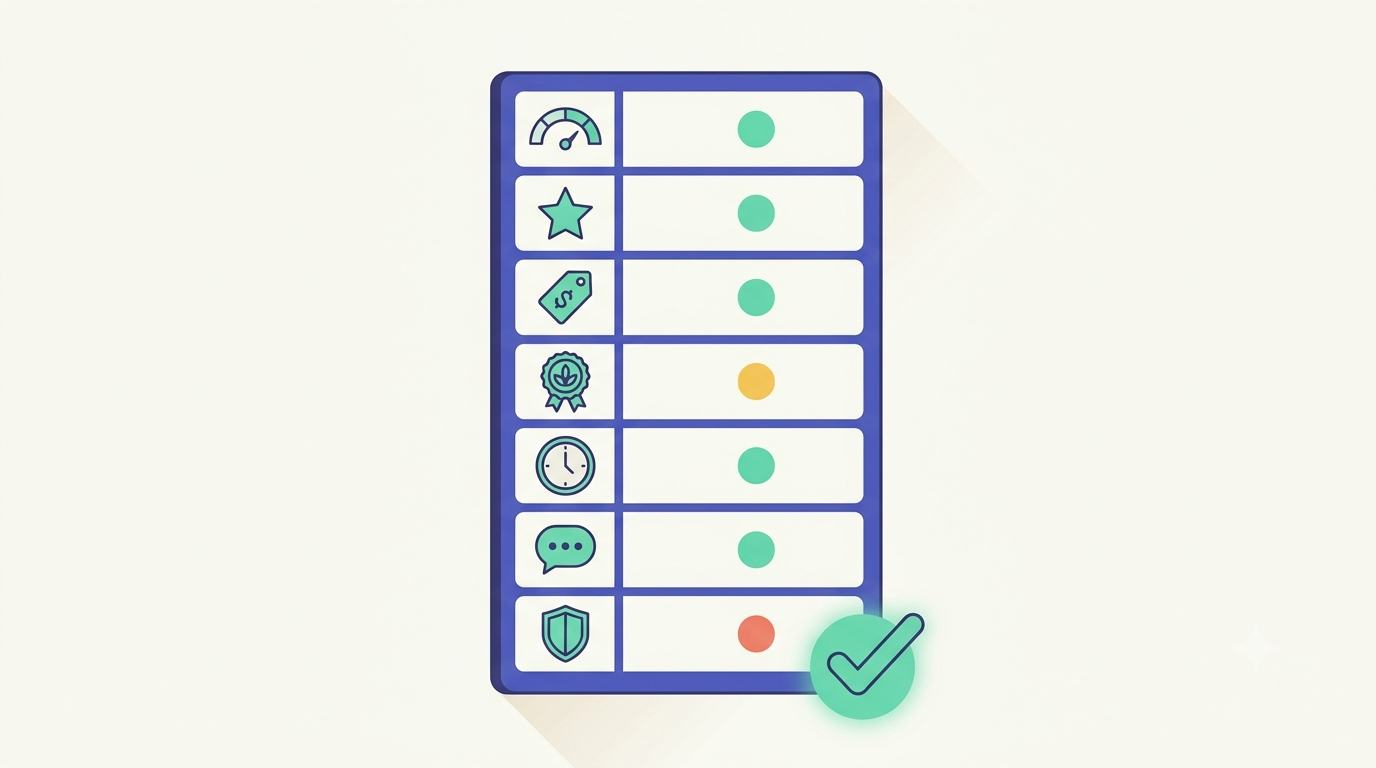
The app-idea framework in practice
Here is what scoring a Shopify app idea looks like on a hypothetical category that clears the bar:
Read that as a pattern, not a real listing. A category that scores like this — a few hundred apps, a mediocre average dragged down by a long mid-rated tail, no single app with a runaway review count, paid plans in the $9–29 range, and 1-star reviews that keep naming the same three failures (slow widgets, a core feature locked behind an expensive plan, broken imports) — lands at 5+ greens. The move is not to clone the leader; it is to attack the specific failure the whole category shares. You can run the quantitative half of this framework as a single saved search — under-4★ paid apps with fewer than 1,000 reviews under $30/month, minus the structural traps — then read the reviews on whatever surfaces.
You do not need a brilliant app idea. You need a disciplined filter applied to a market that is already telling you what it wants. Every input here — app count, average rating, BFS penetration, launch dates, review counts, pricing — is in AppAnalizer, filterable and exportable to CSV. Start your free research session →
See also: How to research the Shopify App Store before you build · The most underserved categories in 2026 · How much do Shopify apps make?